
As businesses accelerate digital transformation, productivity automation with AI is no longer a trend. It has become a strategic necessity.
Teams that use AI to manage repetitive tasks, streamline workflows, and improve collaboration move faster, deliver higher value, and free human talent for more impactful work. In 2026, leading companies leverage AI tools for work, the best AI productivity tools, and AI tools for team efficiency to redefine how work gets done.
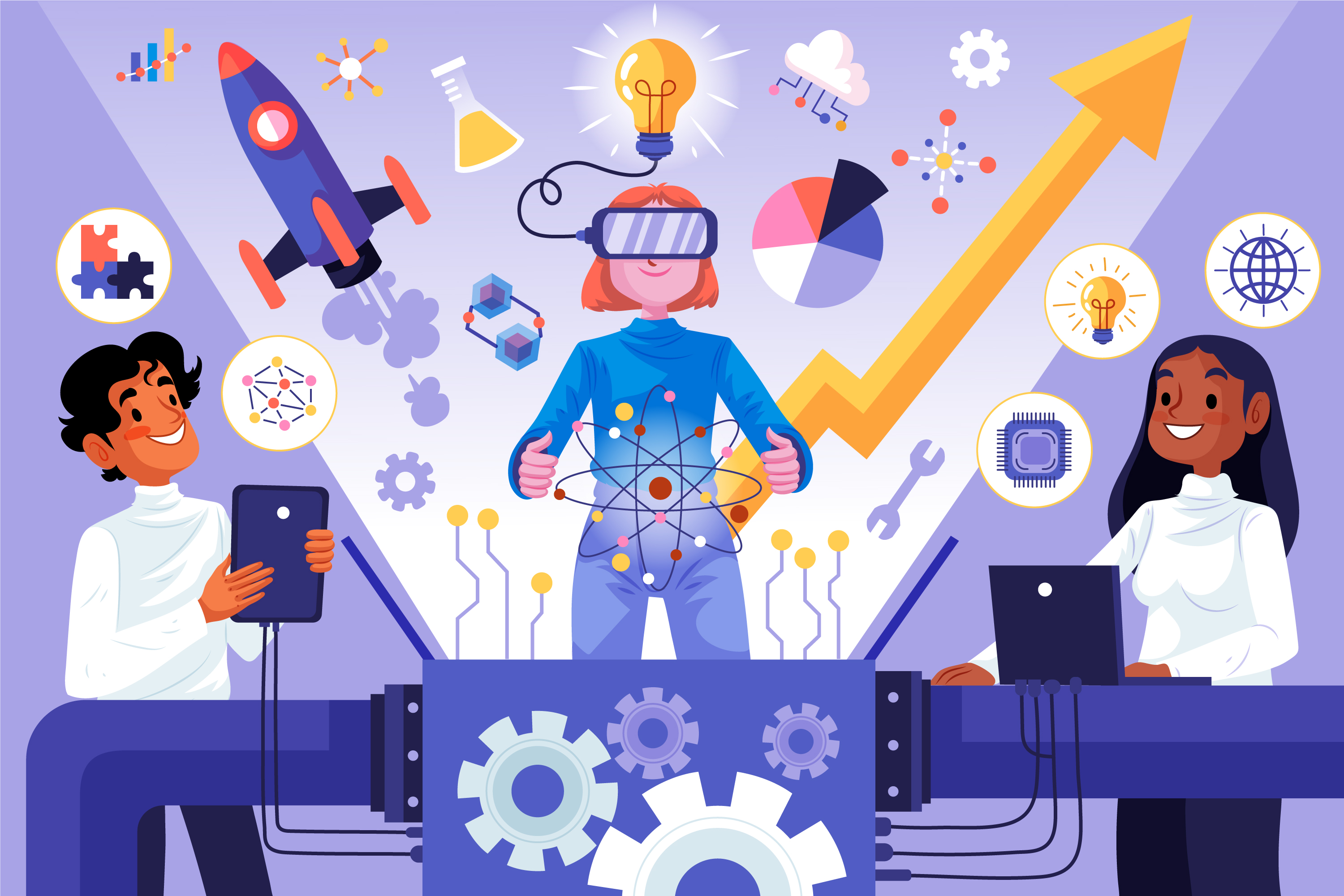
All purpose AI assistants continue to deliver the greatest productivity impact across industries. Platforms such as ChatGPT serve as powerful engines for writing, research, planning, and basic programming tasks.
These tools help teams draft emails, summarize documents, analyze data, and generate ideas in minutes rather than hours. For organizations operating across marketing, operations, product, and analytics, AI assistants function as virtual teammates that accelerate daily execution.
Managing cross functional projects often creates friction when information and communication become fragmented. Collaboration platforms such as Miro AI and ClickUp AI embed intelligence directly into project workflows.
Miro AI transforms brainstorming sessions into structured plans, while ClickUp AI supports task assignment, risk forecasting, and workflow optimization. These features reduce manual coordination and improve execution speed.
Data preparation and knowledge management often slow teams down. Tools such as Airtable AI and Notion AI streamline data organization, generate insights, and support intelligent documentation.
Instead of spending hours formatting spreadsheets and organizing content, teams can focus on analysis and decision making, which increases operational efficiency.
AI continues to improve how meetings are captured and translated into action. Platforms such as Otter.ai and Glinky automatically record conversations, generate transcripts, summarize key points, and extract action items.
This reduces manual note taking, improves accountability, and keeps teams aligned without unnecessary repetition.
Significant productivity gains come from eliminating repetitive operational work. Automation tools such as Zapier Agents and n8n connect applications and trigger workflows automatically.
By reducing manual handoffs and repetitive execution, teams can redirect effort toward strategic initiatives that drive business growth.
If improving support efficiency is part of your automation strategy, our article on AI in Customer Support Tips to Train Your Chatbot for Better Replies provides practical guidance on building effective AI driven support systems.
While AI tools deliver strong potential, value depends on how well they are integrated into real workflows.
Partnering with a technology team like Dihardja Software enables businesses to integrate AI into core systems, build custom automation pipelines, and develop scalable applications that maximize operational efficiency. Thoughtful implementation ensures productivity tools amplify performance rather than create fragmentation.
AI is not designed to replace human creativity or strategic thinking. It removes routine workload so teams can focus on innovation, problem solving, and growth.
Organizations that embrace productivity automation with AI in 2026 will operate faster, collaborate better, and adapt more effectively in an increasingly competitive digital environment.
Lorem ipsum dolor sit amet, consectetur adipiscing elit, sed do eiusmod tempor incididunt ut labore et dolore magna aliqua. Ut enim ad minim veniam, quis nostrud exercitation ullamco laboris nisi ut aliquip ex ea commodo consequat. Duis aute irure dolor in reprehenderit in voluptate velit esse cillum dolore eu fugiat nulla pariatur.
Block quote
Ordered list
Unordered list
Bold text
Emphasis
Superscript
Subscript
.png)





.svg)


