
Digital health technologies are rapidly reshaping how healthcare providers interact with patients. Clinics and healthcare providers are increasingly adopting AI-powered healthcare apps to deliver more efficient, accessible, and personalized medical services.
Mobile healthcare applications allow patients to access medical information, schedule appointments, and communicate with healthcare professionals directly from their smartphones. When combined with artificial intelligence, these apps become even more powerful by providing intelligent insights and automated assistance.
For clinics seeking to improve patient engagement and streamline healthcare services, AI-powered healthcare apps are becoming an essential digital solution.
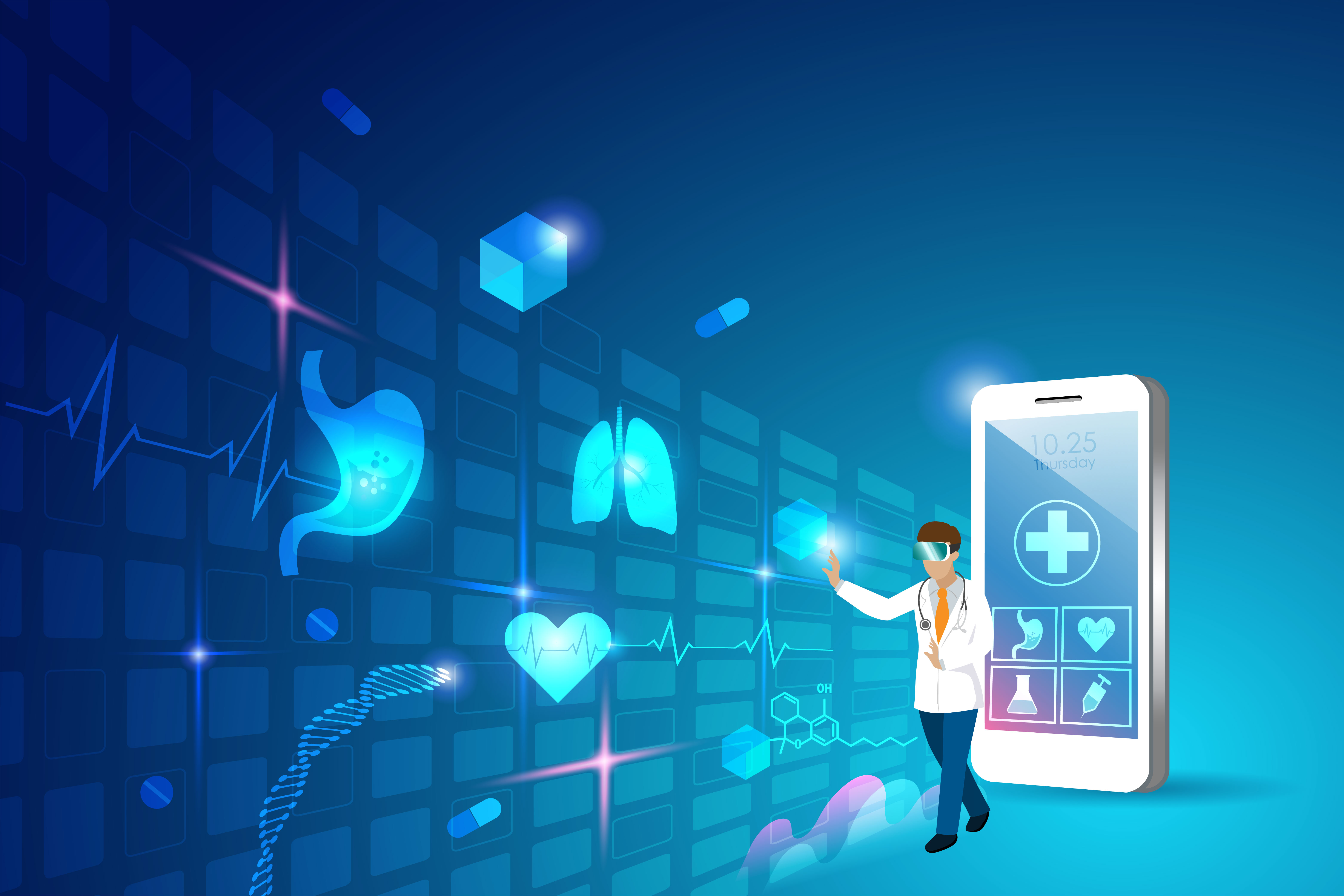
Patients today expect healthcare services to be convenient and accessible. AI-powered mobile applications help clinics meet these expectations by offering faster services and personalized care.
Healthcare apps also support broader digital transformation initiatives, similar to how technology adoption is transforming other industries. As discussed in our article “The Advantages of Digital Transformation: Reshaping Businesses for a Prosperous Future,” digital tools help organizations improve efficiency and deliver better services.
Here are several AI-powered features clinics should consider when developing healthcare applications.
AI-powered symptom checkers allow users to input symptoms and receive preliminary health insights.
Using machine learning algorithms trained on medical datasets, these systems can suggest possible conditions and recommend whether users should seek professional medical care.
While symptom checkers do not replace medical professionals, they help patients make informed decisions about their health.
AI-powered virtual assistants help patients interact with healthcare apps more easily.
Patients can ask questions about medications, treatment plans, or appointment availability. Virtual assistants can also remind patients to take medication or attend scheduled appointments.
AI algorithms can analyze patient health data to provide personalized insights and recommendations.
For example, healthcare apps may monitor lifestyle data such as physical activity, sleep patterns, and diet to offer health improvement suggestions.
AI systems can automate appointment scheduling by analyzing clinic availability and patient preferences.
This reduces administrative workload while improving patient convenience.
AI-powered healthcare apps can analyze patient data to identify potential health risks. For example, apps can monitor vital signs or health patterns and alert users when abnormal trends are detected.
Predictive monitoring helps clinics provide proactive care and improve long-term patient outcomes.
As artificial intelligence continues to evolve, healthcare apps will become more intelligent and capable of supporting complex medical services.
Future healthcare apps may include advanced diagnostics, remote monitoring systems, and deeper integration with electronic health records.
Clinics that adopt AI-powered healthcare apps today will be better positioned to deliver innovative healthcare services in the future.
AI-powered healthcare apps offer clinics an opportunity to improve patient engagement, streamline operations, and deliver more personalized healthcare services.
By integrating features such as symptom checkers, virtual assistants, and predictive health monitoring, clinics can create digital solutions that benefit both patients and healthcare providers.
Lorem ipsum dolor sit amet, consectetur adipiscing elit, sed do eiusmod tempor incididunt ut labore et dolore magna aliqua. Ut enim ad minim veniam, quis nostrud exercitation ullamco laboris nisi ut aliquip ex ea commodo consequat. Duis aute irure dolor in reprehenderit in voluptate velit esse cillum dolore eu fugiat nulla pariatur.
Block quote
Ordered list
Unordered list
Bold text
Emphasis
Superscript
Subscript
.png)


.svg)


